

SBA Loan Requirements in 2026: What Lenders Want to See
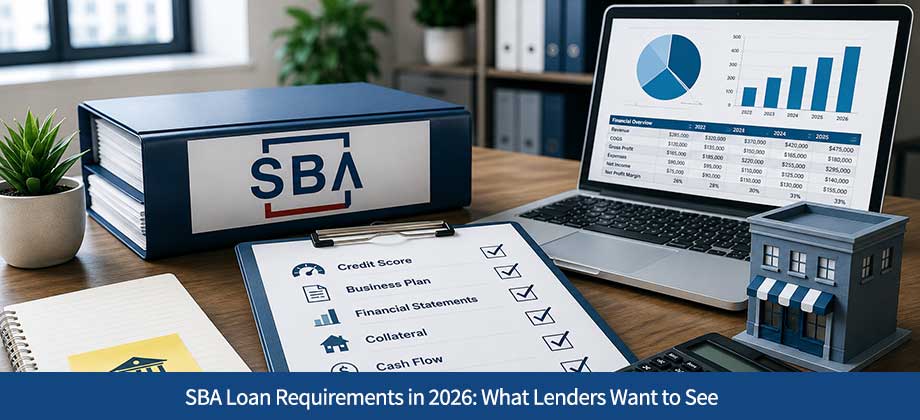
A lot of small business owners see an SBA loan as one of the most attractive financing options available. Backed in part by the U.S. Small Business Administration, SBA loans often offer lower rates, longer repayment terms, and higher borrowing limits than many conventional financing products. However, while SBA loans can be easier to qualify for than some traditional bank loans, approval is far from automatic.
So, what exactly are SBA lenders looking for in 2026?
The answer can be summarized in five key areas: cash flow, creditworthiness, business stability, owner investment, and a clear repayment strategy. Let’s dive into each of these areas together!
Strong Cash Flow Is Still King
If there’s one factor that consistently ranks above all others, it’s cash flow.
SBA lenders want to see that your business generates enough income to comfortably repay existing obligations and any new loan payments. According to SBA lending experts, lenders frequently use a metric called the Debt Service Coverage Ratio (DSCR), which compares a business’s operating income to its debt obligations. Many lenders prefer to see a DSCR of at least 1.25, meaning the business generates $1.25 in cash flow for every $1.00 of debt payments.
Even if your business is profitable on paper, inconsistent cash flow can make lenders hesitant. That’s why maintaining accurate financial statements and demonstrating consistent revenue trends remains critical.
Credit Matters — But It’s No Longer Everything
Good credit continues to improve approval odds, but SBA lending has evolved.
In 2026, the SBA eliminated the mandatory FICO SBSS scoring requirement for many smaller 7(a) loans, giving lenders greater flexibility to evaluate borrowers based on the overall strength of their business rather than a single credit score.
That said, lenders still review both personal and business credit histories carefully. Many SBA lenders prefer personal credit scores above 640-680, although strong cash flow, collateral, and business performance can often offset a less-than-perfect score.
Lenders also pay close attention to recent bankruptcies, tax liens, foreclosures, and payment histories.
Business Experience and Stability Matter
SBA lenders aren’t just evaluating a business—they’re evaluating the people running it.
Most lenders prefer businesses that have been operating for at least two years, although startups and acquisitions can still qualifyunder the right circumstances. Owners should be prepared to demonstrate industry experience, management expertise, and a clear understanding of their business model. For acquisitions, lenders often place significant weight on whether the new owner has the skills and background necessary to operate the business successfully.
A well-prepared business plan, detailed financial projections, and a compelling growth strategy can strengthen an application considerably.
Equity Injection and Owner Commitment
SBA lenders want to see that owners have skin in the game.
Depending on the loan purpose and size, lenders may require an equity injection, commonly referred to as a down payment. Business acquisitions often require a contribution of around 10 percent of project costs, while requirements can vary for other SBA loan uses.
Beyond the actual dollar amount, lenders are looking for evidence that owners are personally invested in the success of the business. This demonstrates commitment and reduces lending risk.
A Clear Story About How the Loan Will Be Repaid
One of the most overlooked aspects of SBA lending is the repayment narrative.
Lenders want to understand exactly how the funds will be used and how those funds will help generate the revenue needed to repay the loan. Whether the loan will be used for working capital, equipment purchases, business acquisition, debt refinancing, or expansion, applicants should be able to clearly explain the purpose and expected return on investment.
The strongest applications tell a straightforward story: here’s why we need the capital, here’s how we’ll use it, and here’s how the business will generate enough cash flow to repay the loan.
Documentation Is More Important Than Ever
Many SBA loan applications are delayed not because the business is unqualified, but because the documentation is incomplete. Lenders commonly request business and personal tax returns, profit-and-loss statements, balance sheets, debt schedules, ownership information, personal financial statements, and supporting documentation for any equity injection. Being organized can significantly accelerate the underwriting process and improve approval odds.
In 2026, SBA lenders are taking a more holistic view of borrowers. While credit scores remain important, the emphasis has shifted toward overall business health, cash flow strength, management capability, and repayment ability. Businesses that maintain strong financial records, demonstrate consistent revenue, and clearly articulate their growth plans are often in the best position to secure SBA financing.
At ARF Financial, we understand that every business has a unique story. Whether you’re exploring SBA loan options, seeking working capital, or looking for financing solutions tailored to your business goals, our team is committed to helping entrepreneurs like you access the funding they need to grow. Visit us today to learn more!
Your privacy is important to us. ARF Financial will never sell or rent your information to any third party. Click here for more information about our privacy policy.