

What Proposed Bankruptcy Changes Could Mean for Small Businesses
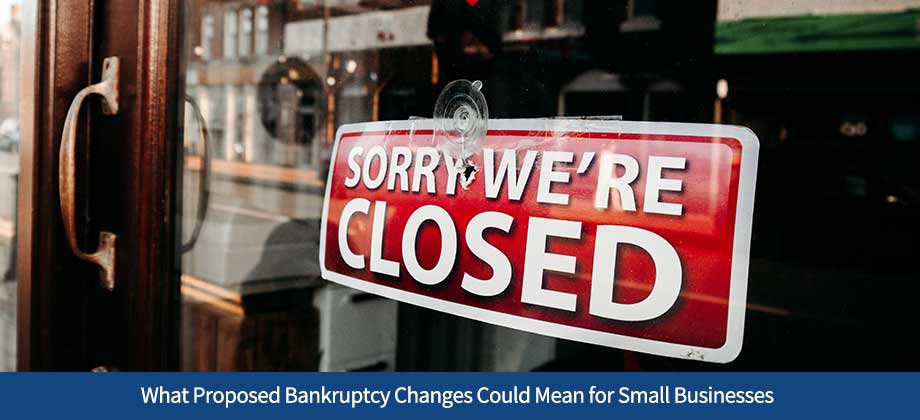
For small business owners facing significant debt, bankruptcy can be a way to restructure obligations and keep a company operating rather than shutting down entirely. Now, Congress is moving toward restoring broader access to one of the bankruptcy system’s most important tools for small businesses.
According to a recent Reuters report, both the House and Senate have passed legislation that would restore the $7.5 million debt limit for Subchapter V bankruptcy. The chambers still need to approve identical legislation before it can be sent to the president, however. Today we’ll cut through the jargon and cover what this move actually means for small businesses.
What Is Subchapter V?
Subchapter V is a streamlined form of Chapter 11 bankruptcy created by the Small Business Reorganization Act of 2019, designed specifically to make business reorganization more accessible and less expensive for smaller companies.
Under Subchapter V, eligible businesses can generally continue operating while developing a plan to repay creditors. The process also eliminates some of the expenses and procedural requirements associated with traditional Chapter 11.
The U.S. Department of Justice notes that Subchapter V features shorter deadlines, greater flexibility in negotiating restructuring plans and no quarterly U.S. Trustee fees. Unlike traditional Chapter 11, a creditors’ committee isn’t required.
For a small business struggling with debt, those differences can be significant.
Why Does the $7.5 Million Threshold Matter?
When Subchapter V was introduced, the debt limit was approximately $2.75 million, adjusted for inflation. Then, during the COVID-19 pandemic, Congress temporarily increased the limit to $7.5 million, allowing more businesses to use the streamlined process.
That higher threshold expired in 2024. The limit subsequently reverted to a lower level, currently about $3.42 million after inflation adjustments, according to the U.S. Trustee Program. That means a business with several million dollars in debt could potentially have been eligible for Subchapter V under the temporary $7.5 million threshold but excluded once the higher limit expired.
The American Bankruptcy Institute’s congressional task force report found substantial support among bankruptcy professionals for making the $7.5 million threshold permanent.
What Could This Mean for Small Businesses?
If Congress ultimately restores the higher threshold, more small and midsized businesses could have access to a restructuring option designed around their circumstances.
That doesn’t mean bankruptcy becomes an easy solution—or that every struggling business should consider filing. Bankruptcy carries significant legal and financial consequences, and business owners should consult qualified legal and financial professionals before making that big of a decision. That being said, expanding eligibility could give some businesses another option when debt has become too difficult to manage. It could also help owners focus on restructuring rather than simply liquidating assets or closing the company. Reuters reports that more than 6,600 businesses filed under Subchapter V between January 2024 and August 2026, with monthly filings increasing substantially during that period.
The Bigger Lesson for Business Owners
For entrepreneurs, the development is also a reminder of why cash-flow management and early financial planning matter. A business doesn’t necessarily have to wait until a financial crisis to evaluate its options. Reviewing debt obligations, improving cash flow, maintaining adequate working capital and understanding available financing can help owners make decisions before financial pressure becomes overwhelming.
For businesses carrying substantial debt, the potential restoration of the $7.5 million threshold is worth watching. But for every business owner, the broader takeaway is the same: understanding your financial options before you need them can provide greater flexibility when conditions change.
At the Financial Pantry, we’ll continue tracking developments that affect small business owners, from financing and cash flow to regulations and the broader economy. Check back often for practical explanations of the news behind the numbers—and what it could mean for your business.
Your privacy is important to us. ARF Financial will never sell or rent your information to any third party. Click here for more information about our privacy policy. Photo by Lisa Fotios