

Record Diesel Prices and Rising Shipping Rates: The Small Businesses Feeling It First
How high are diesel prices in 2026?
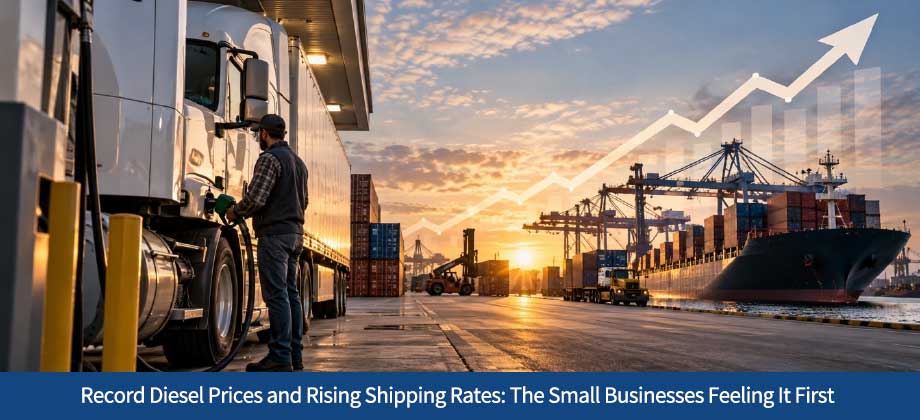
Diesel hit a record $6.53 a gallon on September 22, 2026, up 77% from $3.69 a year earlier (Chase). Regular gasoline averaged $4.43, up from $3.20 a year ago (Fortune).
Why are fuel prices so high?
The conflict involving Iran has disrupted global oil supply. Most shipping through the Strait of Hormuz, which carried about one-fifth of the world’s oil before the war, has stopped, and attacks have hit oil facilities and alternate shipping routes (Fortune). Diesel is especially tight because it competes with jet fuel and heating oil for limited refinery capacity (Chase).
Relief may not come soon. Bank of America analysts warned prices could stay between $95 and $120 a barrel if disruptions continue (Fortune). Heating oil demand also rises in winter, which can keep pressure on diesel.
How much are shipping rates going up in 2027?
FedEx will raise standard U.S. shipping rates an average of 5.9% on January 4, 2027, matching its increases in each of the past three years. The real increase is higher for many shippers (Yahoo Finance):
| FedEx change (effective January 2027) | Increase |
| Ground packages, 1 to 5 pounds | 6.49% |
| 2Day A.M. | 6.65% |
| First Overnight | 6.01% |
| Express Saver | 3.09% |
| Residential delivery surcharge | $6.95 to $7.35 per package |
| New fee for paper trade documents (January 18) | $25 |
UPS hadn’t announced its 2027 rates at the time of writing, but it has matched FedEx’s increases in past years.
Which small businesses are hit hardest by high fuel costs?
Businesses that move goods or drive to customers feel it first:
- Trucking and logistics. Fuel is one of the biggest operating expenses, and many contracts reset fuel surcharges on a delay.
- Construction and trades. Work trucks, generators and heavy equipment run on diesel. Fixed-price bids signed months ago don’t reflect today’s fuel costs.
- Agriculture and landscaping. Equipment-heavy operations with thin margins and seasonal revenue.
- Wholesalers, distributors and e-commerce sellers. They pay more for freight coming in and shipping going out, right before the holidays and the January rate increase.
- Mobile service businesses. HVAC, plumbing, pest control, cleaning and delivery fleets burn fuel on every service call.
- Restaurants and food service. Food distributors pass along fuel surcharges, and delivery costs rise.
Why can’t businesses just raise their prices?
They can, but not right away. Fuel surcharges are the main way freight costs pass through, and many contracts tie those surcharges to diesel benchmarks that update on a delay (Chase). Contractors are locked into signed bids. Retailers worry about losing price-sensitive customers.
That creates a gap. The business pays more for fuel and freight every week, while revenue stays flat until new prices take effect. A profitable business can still run short on cash during that stretch.
How can small businesses manage rising fuel and shipping costs?
Most owners combine a few strategies:
- Review contracts and add or update fuel surcharge clauses.
- Shorten bid validity periods and build fuel escalators into new quotes.
- Plan routes to cut miles and idle time.
- Compare carriers and slower shipping services before January rates take effect.
- Lock in supplier pricing or buy key materials ahead of increases.
- Line up working capital to cover the gap until price changes kick in.
How should referral partners start the conversation?
Ask clients in these industries two questions: “How much more are you spending on fuel and freight than last year?” and “When will your new pricing take effect?” If the answer to the second question is “next quarter” or “when the contract renews,” the client may need capital now.
How ARF Financial helps businesses absorb rising costs
ARF Financial offers bank loans and revolving lines of credit with fixed weekly payments, not merchant cash advances. For businesses squeezed by fuel and freight:
- Elevate Bankroll is a revolving line of credit for businesses with three or more years under the same ownership. Owners draw funds as costs rise, pay down principal as new pricing kicks in, and can use an interest-only period to keep payments low while they adjust. There’s no prepayment penalty.
- Interest-Only Flex Pay Loans let owners pay only interest for up to a year, with a built-in 18- to 24-month amortization afterward. It’s designed for service contractors and other businesses protecting cash flow while they invest.
- Working Capital Loans cover fuel, freight, equipment, payroll and other operating costs with fixed terms up to 36 months.
ARF right-sizes every loan to the business’s cash flow, so clients get enough to bridge the gap without taking on payments that strain them later. Many ARF products offer approval decisions within 24 to 48 hours. All financing is subject to credit approval and approved industries.
To submit a client for review, reach out to your ARF Financial representative today. Not yet a referral partner? Join the Loan Stars Referral Partner Program.
Your privacy is important to us. ARF Financial will never sell or rent your information to any third party. Click here for more information about our privacy policy.