

Looking Ahead: Small Business Trends in 2026
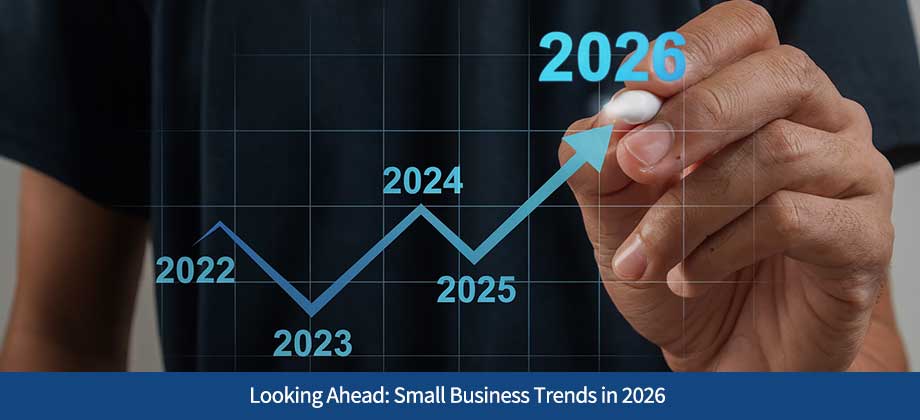
The new year is just around the corner, and as we look ahead to 2026, the landscape for small businesses appears to be evolving rapidly. Things like technology adoption, shifting consumer preferences, and broader economic changes are pushing entrepreneurs to adapt, and smart small businesses are seizing the moment. Let’s check out the top trends shaping commerce for small business owners—and how you can take advantage.
AI Integration & Automation Become Essential
AI is no longer optional. Despite recent headlines that AI is a bubble set to burst at any moment, it has become a core tool for small businesses aiming to scale efficiently. According to a recent roundup of 2026 small-business trends, many SMBs are embedding AI-powered tools into everyday workflows—from customer service chatbots and predictive analytics to automated bookkeeping and data entry.
For small teams, that means cutting down time on repetitive tasks and freeing up human capacity for creative, high-value work. As Wokay notes, businesses using smart tools are seeing notable gains in efficiency and profitability, and that’s a powerful advantage for resource-conscious small businesses.
What to do: Start by identifying time-consuming tasks (think invoicing, scheduling, and customer follow-ups), and experiment with plug-and-play AI tools. Even small wins can add up quickly!
Ecommerce & Social/Omnichannel Commerce Accelerate
The shift toward online shopping and hybrid retail experiences continues in 2026. According to one trend forecast, ecommerce and omnichannel strategies remain vital for SMBs, combining digital storefronts with offline or hybrid approaches such as local pickup, pop-ups, or delivery.
Even more significant: social commerce (selling directly on social platforms) is booming. Platforms like TikTok Shop are reshaping how consumers discover and buy, giving small businesses direct access to global audiences without the overhead of a big ecommerce setup.
What to do: If you haven’t already, consider listing a few “hero” products on social commerce channels or setting up an online storefront. Use mobile-first design, social-media friendly content (short videos, shoppable posts), and aim for seamless checkout.
Sustainability and Ethical/Values-Driven Commerce Gain Ground
Consumers, especially younger generations, are increasingly demanding transparency, sustainability, and ethical business practices. Small businesses that embrace green principles and values-driven policies are more likely to earn customer loyalty and stand out in crowded markets.
For small or micro businesses, this doesn’t require massive overhaul. Simple steps like using sustainable packaging, sourcing ethically, or adopting circular-economy practices can make a difference.
What to do: Review your suppliers, materials, and packaging. If possible, opt for eco-friendly alternatives, transparent sourcing, or highlight your brand values. Sharing those efforts in your marketing can resonate deeply with values-driven consumers.
Remote Work, Lean Teams & Flexible Operations Are the New Normal
The post-pandemic shift toward remote work and hybrid operations continues to benefit small businesses. By tapping freelancers, remote talent, and distributed workflows, small firms can stay lean, reduce overhead costs, and adapt quickly to changing demands.
This flexibility also lowers barriers for entrepreneurs: you don’t need a big team or huge physical office to launch or scale. Combined with automation and SaaS tools, small businesses can deliver big-business capabilities with a small-business footprint.
What to do: Consider what roles can be outsourced or handled remotely: marketing, customer support, and admin tasks are all great candidates. Explore freelance marketplaces or remote-friendly staffing models, and pair it with cloud-based tools to keep operations smooth.
Recurring-Revenue & Subscription Models Offer Stability
In an unpredictable economy, recurring-revenue models are becoming a big favorite among small businesses. Subscription services, memberships, and retainers can create predictable cash flow, increase customer lifetime value, and smooth out seasonal fluctuations. Whether it’s a product subscription box, a service retainer, or a membership-based offer, recurring models help build long-term relationships and give businesses more financial certainty.
What to do: Look at your offerings: could any product or service be repackaged as a subscription or recurring service? Even simple monthly services or replenishment products can make a difference!
If you’re a small business owner willing to adapt, 2026 could be a landmark year full of success. Stay on track with the latest industry trends over at the Financial Pantry—we’ve got you covered when it comes to marketing tips, breaking news, and so much more.
Your privacy is important to us. ARF Financial will never sell or rent your information to any third party. Click here for more information about our privacy policy.